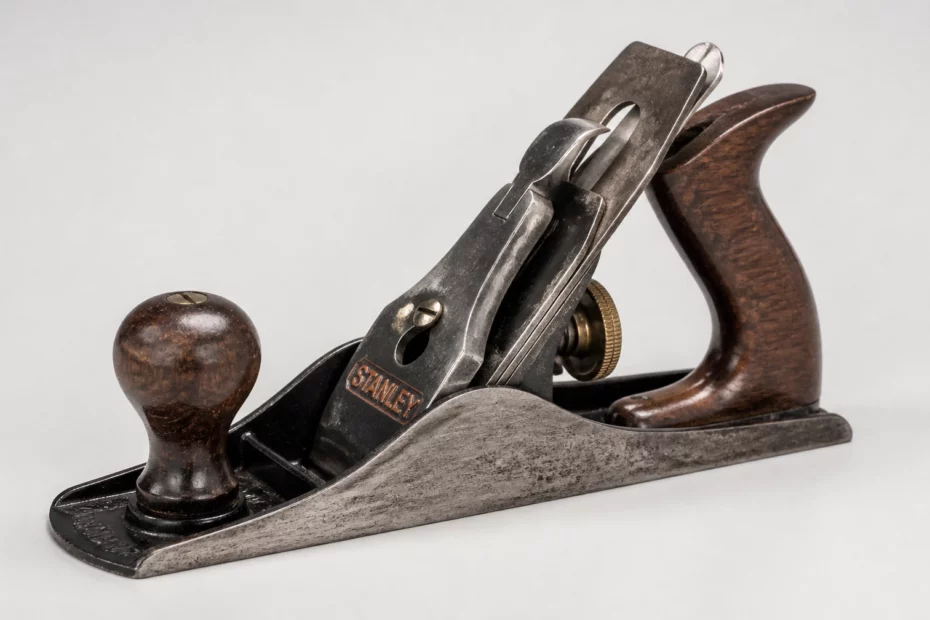
In this final installment of our deep-dive into the world of Stanley tools, we shift our focus from historical identification to the pragmatic science of evaluation. Whether you are standing in a dusty barn or browsing a high-resolution online auction catalog, the ability to discern condition from mere cosmetic wear is what separates the seasoned collector from the enthusiast. This Stanley plane condition guide serves as a comprehensive framework for assessing the structural integrity, historical authenticity, and market value of these iconic implements.
The Philosophy of Originality vs. Restoration
For many years, the standard approach to vintage tools was to strip, sand, and polish them until they looked "new." In the modern collecting market, this is often a catastrophic error. A tool that has been over-restored: stripped of its original japanning and wire-brushed to a high shine: loses the "patina" that many collectors prize. Patina is more than just age; it is the evidence of a tool's history and a testament to its survival.
When evaluating a plane, originality should always be your primary benchmark. A tool in "fine" original condition will almost always command a higher premium than a "mint" restored version. Collectors look for the original black japanning, the undisturbed finish on the rosewood handles, and the gentle darkening of the metal that occurs over a century. Over-restoration can mask structural defects and erase the subtle markers used for dating, significantly devaluing the piece.
Structural Integrity: The Cast Iron Inspection
The most critical step in evaluating any Stanley plane is checking for structural failures in the cast iron body. Unlike wooden planes, cast iron is brittle and prone to cracking if dropped or subjected to extreme temperature fluctuations.
- The Mouth and Cheeks: The most common failure points are the "mouth" (the slot where the blade protrudes) and the "cheeks" (the arched sides of the plane). Even a hairline crack in these areas can render a plane functionally useless for precision work and reduce its collector value to that of a "parts donor." Use a bright light to inspect the corners of the mouth for any sign of stress fractures.
- The Frog Casting: The frog is the adjustable platform that supports the blade. It is often overlooked during a cursory inspection. You must ensure the frog is not cracked, especially around the screw bosses where it mounts to the body.
- Detecting Brazed Repairs: In the past, craftsmen would often "braze" or weld a broken plane body back together to keep it in service. These repairs are usually visible as a yellowish or copper-colored bead along a seam. For a user tool, a well-done braze may be acceptable, but for a collector, it is a definitive deal-breaker.
Evaluating Japanning: The Original Finish
"Japanning" is the thick, black, asphaltum-based baked enamel that covers the interior surfaces of the plane. It was designed to protect the cast iron from rust and provide a durable finish. When assessing japanning, collectors use a percentage-based scale.
A plane with 90% or more of its original japanning is considered exceptional. If the coverage drops below 65%, the tool is often seen as a candidate for restoration by users, but collectors may still prefer the original finish even if it is worn. Look for "flaking" or "bubbling," which indicates that rust is forming underneath the finish. If the japanning has been replaced with modern spray paint, it is no longer considered original.
The "Married" Part Dilemma (Frankenplanes)
One of the greatest challenges for the Stanley collector is identifying "married" parts. Because Stanley produced millions of planes with interchangeable parts across several decades, it is common to find a "Type 11" body with a "Type 15" lever cap and a "Type 13" iron. These are often referred to as "Frankenplanes."
While a married plane may function perfectly as a user tool, its value as a collectible is diminished. To ensure authenticity, you must verify that every component: the body casting, the frog, the iron, the lever cap, and even the screws: belongs to the same manufacturing "Type." Referencing a Stanley plane condition guide alongside a patent chart is the only way to confirm that the tool remains in its original, factory-issued state.
The Collector’s Evaluation Checklist
When you are in the field, use this systematic checklist to grade your find:
- Model Identification: Confirm the model number (e.g., No. 4, No. 605) is cast into the toe or heel.
- Cracks and Repairs: Inspect the sole, cheeks, mouth, and frog for cracks or brazed repairs.
- Original Japanning: Estimate the percentage of original black finish remaining.
- Handle Condition: Check the rosewood (or beech) tote and knob for cracks, chips, or non-original replacements.
- Mechanical Function: Ensure the brass adjustment nut turns freely and the lateral adjustment lever is not bent or loose.
- Iron (Blade) Integrity: Check for "meat on the bone." If the blade has been sharpened down to the slot, it will need replacement. Inspect for heavy pitting on the flat side of the iron, which can make sharpening an edge impossible.
- Originality: Verify that the logo on the iron matches the era of the body casting.
Final Thoughts on Rarity
While condition is king, rarity plays a significant role in valuation. Common planes like the No. 4 (smoothing plane) or No. 5 (jack plane) were produced in such quantities that only those in "Fine" to "New Old Stock" condition command high prices. Conversely, specialty planes like the No. 1 smoothing plane or the No. 164 low-angle plane are so rare that collectors will often overlook minor condition issues just to acquire a specimen.
Understanding the intersection of condition, rarity, and originality is the key to building a world-class collection. We hope this series has provided you with the tools necessary to navigate the fascinating world of Stanley history with confidence.
Understanding the history and origins of your collectibles is more than just a hobby; it is about preserving a legacy. Whether you are holding a nineteenth-century hand plane or a delicate piece of Georgian jewelry, knowing exactly what you have is the first step in being a true steward of history. By matching the patent numbers stamped on your items to specific charts, you can often pinpoint the exact year and manufacturing 'type' of your find, making it far easier to verify authenticity and assess age and value with confidence.
If you are looking to add more history to your own collection, be sure to visit our ongoing auctions at Funky Junk Auctions. For those ready to dive deeper into their own research, you can bookmark our permanent patent charts page and visit often to unlock the history of your finds. And for a truly comprehensive deep dive, don’t forget to check out our latest resource, Your Guide to Dating Antique and Vintage Collectibles, to sharpen your expert eye.
Team Funky
