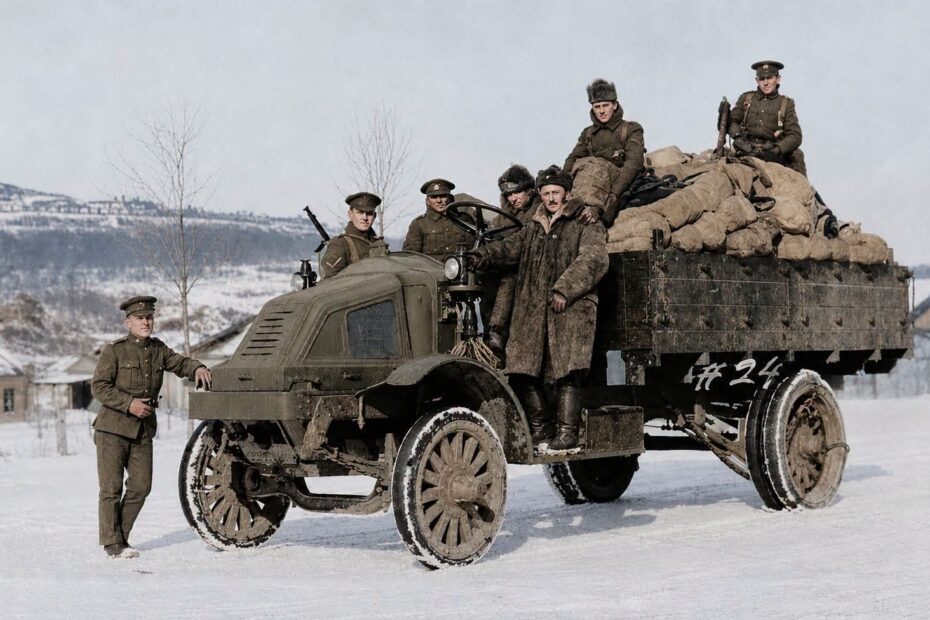
WWI ended on November 11, 1918. But three weeks later, Canada loaded 4,000 soldiers onto ships and sent them to fight in Russia. Almost nobody knows they went. Almost nobody knows why. 🚨
November 1918. The guns fell silent on the Western Front. The world celebrated the end of the "war to end all wars." But in Victoria, British Columbia, thousands of Canadian boys were being told they weren't going home.
In December 1918 : weeks after the Armistice had already been signed in Europe : the Canadian Siberian Expeditionary Force set sail. 4,000 men. Sent across the Pacific, straight into the freezing chaos of the Russian Civil War. Their mission? To support anti-Bolshevik forces.
The reality? It was politically confused, strategically pointless, and deeply, violently unpopular.
At Funky Junk Auctions, we often handle items that whisper stories of the past. From vintage medals to old correspondence, the history behind the pieces we see in our online collectible auctions reminds us that the past is never truly settled. Today, we step away from the auction block to look at a chapter of Canadian history that was nearly erased: the Siberian Expeditionary Force.
A World at Peace, a Nation at War
When the Armistice was signed in November 1918, the collective sigh of relief across Canada was deafening. Families expected their sons, fathers, and brothers to return from the muddy trenches of France and Belgium. However, for 4,000 Canadians, the nightmare was just beginning a new, colder chapter.
The Canadian Siberian Expeditionary Force (C.S.E.F.) was formed during a time of global transition. Russia was in the throes of a brutal civil war following the Bolshevik Revolution of 1917. The "Red" Bolsheviks were fighting the "White" forces : a loose coalition of monarchists, capitalists, and social democrats. The Western Allies, including Britain, France, and the United States, feared the spread of communism and the loss of a major ally. They decided to intervene, and Canada, eager to assert its presence on the world stage, agreed to provide a contingent.
The Strategic Confusion
The men didn't want to go. Who could blame them? They had survived a global slaughter, only to be ordered into someone else’s revolution.
Tensions were so high that some troops actually mutinied in the streets of Victoria before the ships even left port. On December 21, 1918, as the 259th Battalion marched toward the docks, a group of conscripts refused to move. They were forced aboard at bayonet point. It was an ominous start to a mission that lacked both public support and a clear military objective.
Once in Vladivostok, they found themselves fighting the real enemies of the Siberian campaign: typhus, broken supply lines, and a merciless Russian winter. The strategic goal was to support the White Army and secure the Trans-Siberian Railway, but the reality on the ground was far different. Canadian troops were mostly relegated to garrison duty, guarding supply depots and patrolling the port of Vladivostok. They were caught in a political vacuum, waiting for orders that often contradicted the reality of the collapsing White Russian resistance.
The Harsh Reality of the Siberian Winter
The conditions in Vladivostok were grueling. While they weren't charging trenches in France, they were freezing in Russian rail yards for a cause they didn't understand. The Siberian winter was unforgiving, with temperatures dropping far below what many of the men had ever experienced.
Supply lines were nearly non-existent. The "Allied" effort was a mess of competing interests between the Japanese, Americans, and British, with the Canadians stuck in the middle. Disease, particularly typhus, was a constant threat. Canadian soldiers died there: not from enemy fire, but from the elements and illness. These deaths were a bitter pill for families back home who thought the war was over.
For many of these soldiers, the mission felt like a betrayal. They had been told they were fighting for freedom and democracy in Europe, only to find themselves propping up a fractured and often corrupt White Russian regime in the middle of a wasteland.
The Quiet Return and the National Silence
By the spring of 1919, the government realized the mission was a failure. The White Army was crumbling, and domestic pressure in Canada was reaching a boiling point. The men were quietly brought home.
There were no parades. No victory. No clear explanation from their own government about what they had been sent to achieve, or why their lives had been risked.
Canada quietly closed the book on the Siberian Expeditionary Force. We built monuments for Vimy and Passchendaele, but we erased Vladivostok from the national memory. We buried the fact that we forced men to keep fighting after the world had already declared peace.
Why We Remember
At Funky Junk Auctions, we believe that history belongs to everyone. Whether it’s a piece of trench art or a forgotten photograph found in one of our online collectible auctions, these items connect us to the human stories of the past. The 4,000 Canadians who went to Russia deserve to be remembered not just as a footnote in a history book, but as men who were asked to do the impossible in a time of total confusion.
4,000 Canadians went to Russia. It’s time we finally talked about them. As we approach Remembrance Day, let’s take a moment to honor not just the famous victories, but also the forgotten fronts and the men who served in silence.
Enjoy our auctions here: https://funkyjunkauctions.hibid.com/auctions
Team Funky

#RemembranceDay #CanadianHistory #SiberianExpeditionaryForce #WWI #LestWeForget #Vladivostok #MilitaryHistory #ForgottenFront #OnlineCollectibleAuctions #FunkyJunkAuctions #CanadaHistory #RussianCivilWar #HistoricalEducation #VeteranStories #VictoriaBC