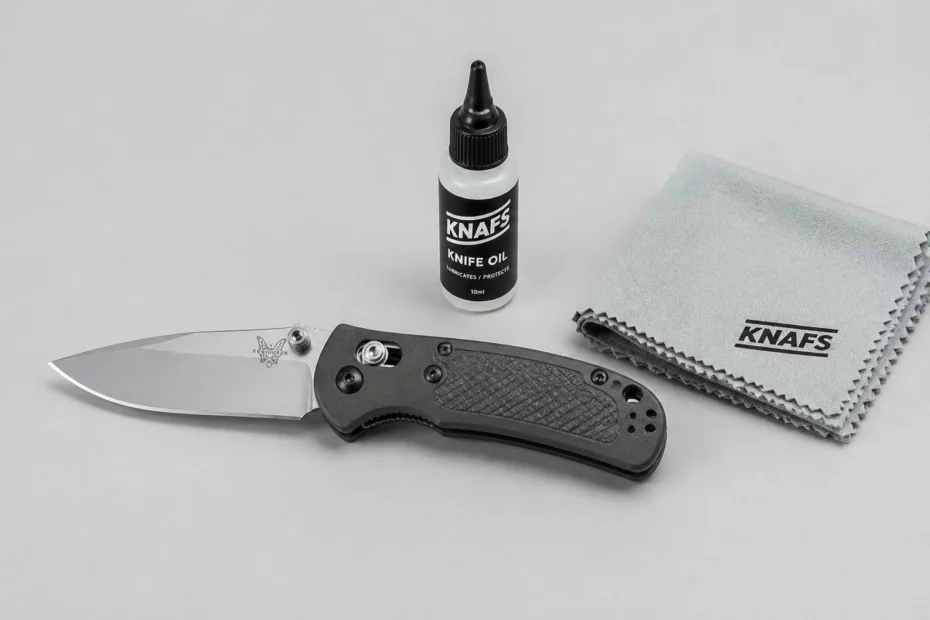
Well hello there, knife fans! We’ve had such a blast diving into the histories of CASE, BUCK, and GERBER over the last few weeks….it’s been a real treat seeing so many of you get excited about these vintage treasures. But once you’ve won that AWESOME vintage folder in one of our auctions, the next big question is always: "How do I keep this beauty in tip-top shape?"
Whether you’ve got a brand-new EDC (Every Day Carry) or a century-old antique, taking care of your blades is the secret to making sure they last for generations. We want your goodies to stay functional and looking great….so today we’re talking all about the "nitty-gritty" of cleaning, oiling, and storing your collection. It’s not just about keeping things pretty; it’s about making sure that blade is ready to work whenever you need it!
Scrub-A-Dub-Dub….Time To Clean That Blade!
You wouldn’t believe the amount of pocket lint, grit, and "mystery gunk" that can find its way into a folding knife. If your blade feels a little "crunchy" when you open it, or if you see some dull spots on the steel, it’s definitely time for a bath. Keeping things clean is the absolute first step in knife care….and honestly, it’s a pretty fun way to spend a rainy afternoon.

For most vintage jewelry-like knives and heavy-duty folders, you don’t need anything fancy. A little warm water and mild dish soap usually do the trick! We recommend using a soft-bristled toothbrush to get into those hard-to-reach spots like the pivot joint and the inside of the handle liners. Just a gentle scrub will loosen up all that old grease and pocket fluff.
If you’ve got some stubborn tape residue or "gunk" on the blade, a little bit of rubbing alcohol or a specialized adhesive remover works wonders. Just be sure to dry everything COMPLETELY once you’re done. Moisture is the enemy of carbon steel….and it’s not too friendly to stainless steel either if left to sit! We like to use a clean microfiber cloth or even a blast of compressed air to make sure every nook and cranny is bone-dry.
When you're cleaning your collection, keep an eye out for….
- Pocket lint in the liners
- Old, dried-up grease in the joints
- Rust spots on the tang
- Adhesive residue from boxes
- Dried food (if you use it for snacks!)
- and so much more
Just A Drop Will Do….The Magic Of Oiling
Once your knife is squeaky clean and dry, it needs a little lubrication to keep things moving smoothly. A dry pivot joint can wear down the metal over time, making the action feel stiff or sluggish. Plus, a thin coat of oil is like a protective shield against the humidity and moisture that causes rust!

We always say "less is more" when it comes to oiling. You really only need one tiny drop right on the pivot point: that’s the spot where the blade rotates. After you apply it, open and close the knife a few times to work the oil into the mechanism. If you’ve got a multi-tool or a slipjoint with multiple blades, give each joint a little love.
For your older, carbon steel blades, it’s a great idea to wipe a very light film of oil across the entire surface of the blade. This prevents the air from reacting with the steel and starting that pesky oxidation process. If you use your knife for food (like slicing up an apple for a snack), make sure you’re using a "food-safe" mineral oil. You can find these at most hardware stores or even the pharmacy. Just avoid using cooking oils like olive or vegetable oil….they can go rancid and get really sticky over time, which is definitely not a "fun" situation!
Staying Sharp….The Basics Of The Edge
There’s nothing more frustrating (or dangerous!) than a dull knife. A sharp blade does the work for you, while a dull one requires you to use extra force, which is how accidents happen. Keeping a keen edge is an ongoing task….honestly, it’s more of a habit than a chore.

If your blade is just a little bit "off," you might only need to "hone" it with a ceramic rod or a leather strop. This realigns the very edge of the metal without removing much material. But if it’s truly dull, it’s time for the whetstone. We suggest holding your knife at about a 20-degree angle: roughly the height of two quarters stacked on top of each other: and using smooth, consistent strokes.
Don't wait until the knife is as dull as a butter knife before you sharpen it! A quick "touch-up" every few weeks will keep it performing like a champ. It takes a little practice to get the hang of it, but there’s something so satisfying about a blade that can glide through paper like butter. If you’re nervous about messing up your favorite vintage find, there are plenty of awesome "guided systems" out there that take the guesswork out of the angles.
Our favorite sharpening treats include….
- Arkansas natural stones
- Diamond hones for hard steels
- Ceramic rods for quick touch-ups
- Leather strops for that mirror finish
- Strop pastes and compounds
- and much more
A Safe Place To Rest….Proper Storage
Where you put your knives when you aren't using them is just as important as how you clean them. We’ve seen many GREAT knives ruined by being tossed into a damp basement or left in a leather sheath for years. Leather is wonderful, but it can actually trap moisture against the steel, leading to deep pits and rust that are a real pain to fix!

For long-term storage, we recommend a "knife roll" or a felt-lined drawer. These keep the knives separated so they aren't banging into each other and getting scratched. Plus, they stay in a dry, temperature-controlled environment. If you live in a particularly humid area, tossing a little silica gel packet into your storage case is a SUPER SMART move to keep things dry.
If you’re a collector who likes to display your "goodies," make sure they aren't in direct sunlight for long periods, as that can sometimes fade or even crack natural handle materials like wood or bone. A nice display cabinet in a hallway or office is perfect for showing off those vintage treasures while keeping them safe from the elements.
Wrapping It Up
Taking care of your collection is part of the fun of being a knife enthusiast! It lets you get "up close and personal" with the craftsmanship and history of these awesome tools. Plus, it ensures that when you find that next must-have item at Funky Junk Auctions, you’ll know exactly how to keep it in prime condition.
We’re always adding new vintage knives and collectibles to our upcoming sales, so make sure to keep a close eye on our current auctions page. You never know what special treat you might find next!
If you have any questions about a specific knife or need a tip on a tricky cleaning job, just reach out. We love talking shop with our fellow collectors. Happy cleaning, and we’ll see you at the next auction!
Team Funky
