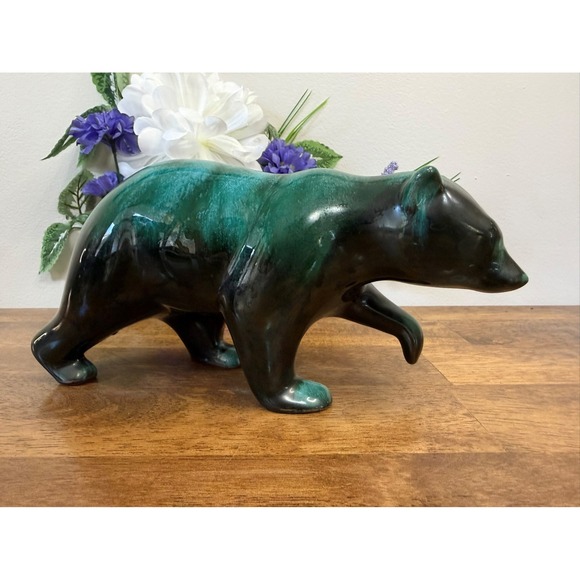
Hey there, fellow treasure hunters! We are so excited to dive into the next chapter of our Blue Mountain Pottery series with you.
We figured it was the perfect time to talk about how to tell the real-deal BMP from the "wanna-bes" out there. If you’ve been searching for auctions near me or auctions near Orillia, you know that finding genuine vintage memorabilia is half the fun and half the challenge!
We’ve seen so many folks come through our doors with a piece of gorgeous Blue-Green (or Teal) pottery, asking the big question: "Is this authentic Blue Mountain Pottery?" Well, grab a coffee (and maybe a snack, because we love our treats around here!) while we walk you through the ultimate collector’s checklist to authenticate your finds….
The "Red Clay" Tell: A Collingwood Secret
If you want to know if that vase was born right here in our neck of the woods, you have to look at its "bones." One of the most famous ways to identify early and mid-period Blue Mountain Pottery is by looking at the clay body itself. Because the original factory was located in Collingwood, they used a very specific local red earthenware clay. This clay is the secret sauce that gives BMP its heart!
When you turn a piece over and look at the unglazed foot or any little spots where the glaze didn't quite reach, you should see a deep, reddish-brown color. It’s a warm, earthy tone that is a dead giveaway of those local roots. Later on, the company did experiment with white clay and some blended slips, but for most collectors, that red clay is the "gold standard" for authenticity. If you see bright white or cream-colored clay on a piece that looks like BMP, it might be a cousin from another pottery house, like Royal Haeger or even some of the later Japanese imports that tried to copy the "drip" look.
It’s like the weather around here….you never know exactly what you’re going to get, but when you see that red clay, you know you’ve found something special!

Deciphering the Marks: Stamps, Stickers, and Trees
Not every piece of BMP was stamped, which can make things a bit tricky for new collectors. But when you do find a mark, it’s like finding a hidden treasure! There are a few main things we always look for when we're cataloging these awesome goodies for our auctions….
- The "BMP CANADA" Stamp: This is the most straightforward mark. It’s usually embossed or incised directly into the wet clay before firing. You’ll see it in a simple, no-nonsense font. Sometimes it’s tiny, and sometimes it’s big and bold, but it’s always a great sign.
- The Three-Tree Logo: This is the iconic visual for the brand. It features three stylized, triangular trees. But here’s the pro-tip: look for the trunks! Authentic Blue Mountain Pottery trees have little trunks at the bottom. There’s another Canadian pottery brand called Laurentian (which we also love!) that uses a very similar three-tree logo, but their trees don't have trunks. It’s a tiny detail, but it makes a huge difference to a serious collector!
- The Blue-and-White Stickers: Because many pieces were hollow or had very small bases (like some of those tiny animal figurines), a stamped mark just wasn't possible. In those cases, the factory used stickers. We see round blue-and-white paper stickers, silver foil labels, and even little hang-tags attached with string. If you find a piece with its original sticker still intact, leave it there! It adds a ton of value to your vintage memorabilia and makes authentication a breeze.

Spotting the "Copycats" vs. The Real Deal
Since Blue Mountain Pottery was so incredibly popular back in the day, a lot of other companies tried to jump on the bandwagon. They saw those gorgeous flowing glazes and thought, "Hey, we can do that too!" While some of these "copycats" are beautiful in their own right, they aren't true BMP.
The biggest giveaway is usually the "flow" of the glaze. BMP used a secret "reflowing" process where two different glazes were applied. During the firing in the kiln, these glazes would melt and run together, creating those organic, streaky patterns. On a real BMP piece, the transitions between the dark and light colors are soft and liquid. On many copies, the colors look more "blocked" or "painted on" rather than naturally flowed.
And remember to check that clay! Many American companies like Royal Haeger used a much whiter clay. If the bottom of the piece looks like a piece of chalk but the top looks like BMP, it’s likely an American cousin. Still fun stuff to have on your shelf, but not the Collingwood classic we all know and love!
What About Crazing?
You might notice some fine, web-like lines underneath the glossy surface of the glaze. This is called "crazing." Some folks think it’s a sign of age or a way to prove a piece is old, but it’s actually just a natural part of the ceramic aging process. It happens when the clay body and the glaze expand or contract at different rates over time.
While a little bit of light crazing is totally normal for vintage pottery from the 60s and 70s, it doesn't actually "prove" it's Blue Mountain Pottery. We treat crazing more as a condition note rather than an identification tool. If a piece has heavy, stained crazing, it might be worth a little less, but for most of us, it just adds to the character and history of the item!
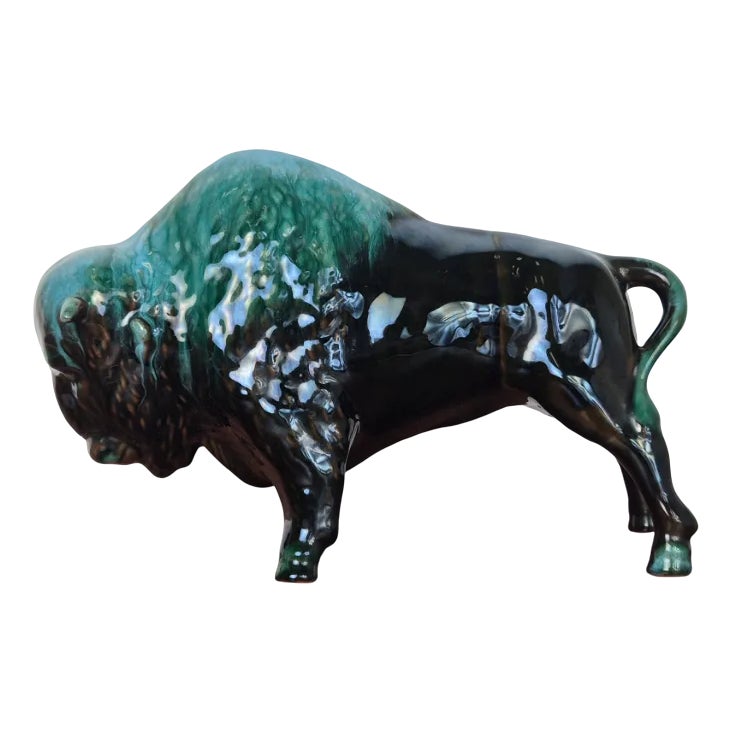
Check Out These BMP Treats!
We love talking about Blue Mountain Pottery because there are so many fun shapes, glazes, and forms for collectors to keep an eye out for. Every piece has its own personality, and that is part of what makes the hunt so much fun.
We know you're going to love these pieces as much as we do. There’s just something about that Collingwood history that makes every piece feel like a little slice of home.
Join the Fun at Our Next Auction!
Ready to add some BMP to your collection? We make it super easy for you to bid on all these special treasures. Our auctions are all online-only, so you can bid from the comfort of your couch (pajamas encouraged!).
Once you win your new goodies, we offer scheduled curbside pickup right here at our location. It’s quick, it’s easy, and it’s always great to see your smiling faces! Make sure you’re registered on our site so you don't miss out on the "LAST BLAST" bidding action. We are your go-to spot for the best vintage memorabilia in the area!
See you at the auction!
Team Funky
Explore the Blue Mountain Pottery Series:
- The Ultimate Guide: <BLOG_POST:dfd540f7-8b0d-4ef4-95a3-0a6623f54583>
- Part 1: The Ski Hill Start: <BLOG_POST:0aa87221-ceb9-45af-9c25-fa01226d3136>
- Part 2: Secrets of the "Drip": <BLOG_POST:dd8fd3e5-ae33-4053-a69a-8647e3d4d88d>
- Part 3: The Iconic Animal Kingdom: <BLOG_POST:bdcebfdd-6d60-48db-8964-fff999646c87>
- Part 4: Beyond the Green: <BLOG_POST:f4f4c3a5-2ca6-4d30-bb03-77cde2ab0fb9>
- Part 6: Caring for Your Collection: <BLOG_POST:7bf753a5-e66b-46b9-8ade-2d006769d5c6>
